Stone Masonry in Chilliwack, BC. Natural stone and cultured stone, set by hand, built to stay.
Natural stone and cultured stone installations for walls, pillars, facades, and landscaping across Chilliwack and the Fraser Valley.
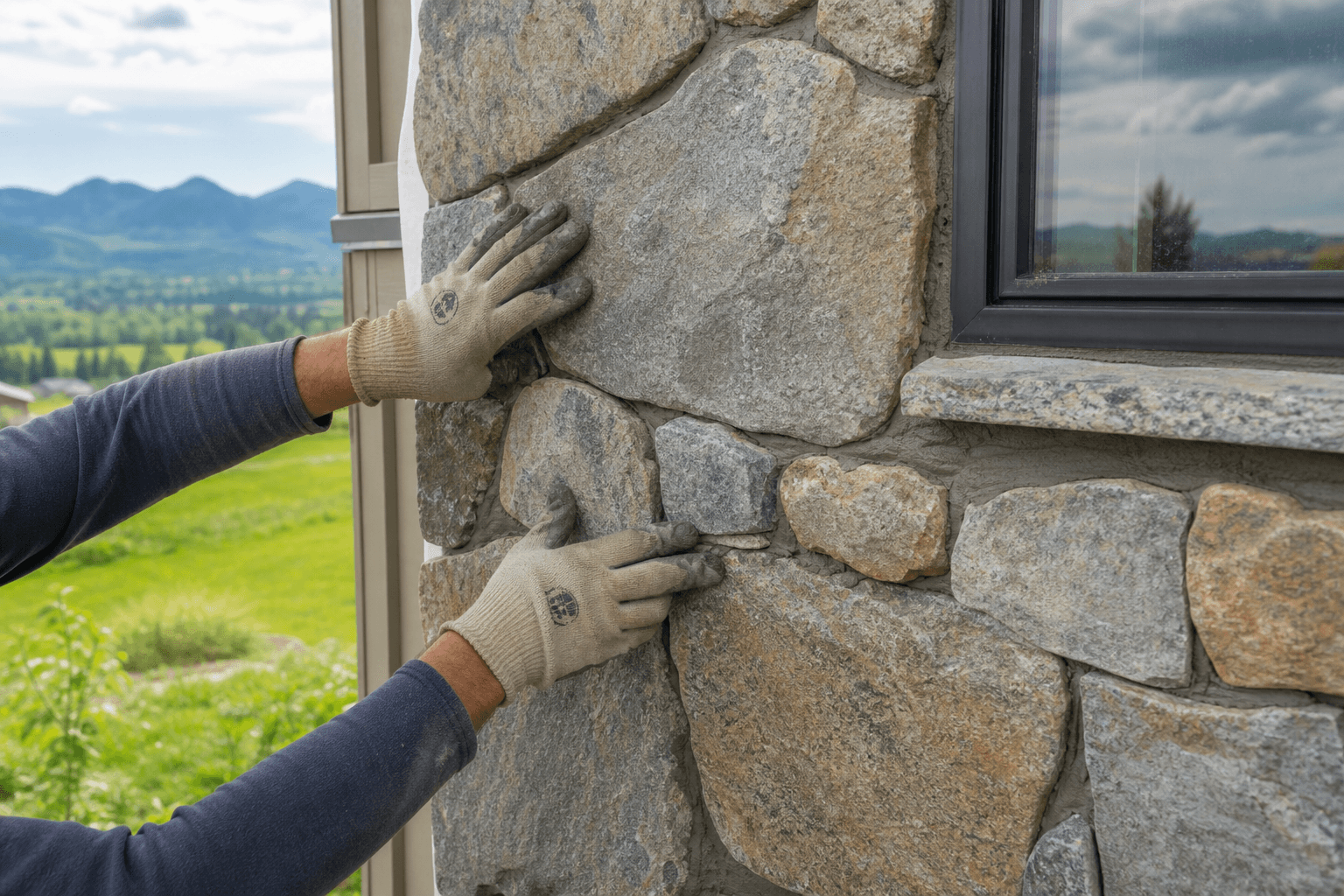
Stone Masonry in Chilliwack. What We Do
Stone masonry in Chilliwack, BC. Natural fieldstone, cut granite, river rock, limestone, or cultured stone, set by hand. Stone work in the Fraser Valley has specific demands: wet winters, freeze-thaw, and clay soil that moves. We know which systems hold up and which ones fail after two seasons.
People search "stone mason" for two very different jobs. One is a structural or landscape wall, real stone, real mass, sitting on a footing. The other is a stone face on a framed wall, which is stone veneer. We do both. Mixing them up is how you get a wall that looks like stone and behaves like a sponge.
Natural stone in this valley comes from a few places. Fraser River cobble and local fieldstone for rustic work. Interior granite and limestone when you want tighter joints and a cleaner face. Cultured stone when the look is right and the weight or budget isn't. We'll tell you which one suits the wall, not just which one photographs well.
Stone is never the same thickness. That's the whole point, and it's also why a dry layout matters. We set the big faces first, fill the gaps, and keep the joint rhythm consistent so it doesn't look like a pile of rocks with mortar smeared in.
What's Included
- Natural stone walls in fieldstone, river rock, granite, and limestone
- Cultured stone installations
- Stone pillars and columns
- Stone facade cladding, residential and commercial
- Dry-stack and mortared stone retaining walls
- Stone garden features and landscape elements
- Interior stone feature walls and fireplaces
When to Call a Masonry Contractor
Exterior stone cladding
Adding natural or cultured stone to a home exterior is one of the most effective ways to add curb appeal. It only lasts if the wall behind it can drain.
Stone feature walls
Interior and exterior stone feature walls are popular in Fraser Valley homes. We install them with proper tie-backs and a moisture barrier on anything that's outside.
A stone wall that's dropping faces
If stones are popping off or the mortar is washing out, the install was usually missing a drainage plane or used the wrong mortar. We fix the system, not just the face.
Landscape stone that has to hold
Pillars, garden walls, and stone features that sit in BC rain need a footing and a mortar that can take freeze-thaw. Decorative stacking without a base doesn't last here.
Why stone fails in a wet climate (and how we stop it)
Stone looks waterproof. It isn't. Water gets in at the joints, behind cultured stone with no rainscreen, and through porous sandstone that should never have been used on an exposed elevation.
The Fraser Valley's rain doesn't just wet the face. Wind drives it through the joints. If there's no cavity or drainage mat behind adhered stone, that water sits against the sheathing. That's how you get rot behind a wall that still looks new from the street.
For structural stone, clay soils heave. Dry-stack garden walls without a compacted base and drainage will lean toward the downhill side after a couple of winters. Mortared walls without a footing do the same, just slower.
Materials and Methods
Natural fieldstone and river rock
Irregular, heavy, and local-looking. Best for garden walls, pillars, and rustic facades. Each stone is unique, so layout time is real labour, not a waste.
Cut granite and limestone
Tighter joints, cleaner lines, more cost. Granite handles freeze-thaw well. Some limestones are too soft for an unsheltered west-facing wall.
Cultured / manufactured stone
A concrete product shaped to look like stone. Lighter, more consistent, more affordable. Fine when it's installed as a drained system. A problem when it's stuck to a wall with no way for water to leave.
Thin natural stone
Real stone, sawn thin. Heavier than cultured stone, more expensive, and worth it when you want the real thing without full-bed thickness.
What Drives the Cost
Nobody should expect a fake square-foot price from a website. Access, height, matching, and what's behind the masonry move the number more than the brochure photo. Here's what we look at before we quote.
Natural vs manufactured
Natural stone costs more in material and in labour because every piece is different. Cultured stone is faster to set. The drainage system behind either one is not the place to save money.
Height and scaffolding
A fireplace surround is a different job than a two-storey facade. Height drives time, access, and safety gear.
Substrate repairs
If we're cladding an existing wall, the sheathing, WRB, and sometimes the framing have to be sound. Rot behind failed stone is a separate line, and we'll tell you before we start.
Corners and openings
Outside corners, windows, and doors are where stone looks expensive or cheap. Proper corner pieces and flashing take time.
What Goes Wrong When It's Done Cheap
Stone set right to grade
Stone veneer needs clearance above soil. Buried weeps and splash-back rot the bottom course. We keep the base out of the dirt.
No rainscreen on adhered stone
Adhered stone has no natural air gap. In Chilliwack, skipping a drainage mat is the most common reason a five-year-old stone wall is hiding rot.
Mortar smeared as grout over the face
Overgrouted stone looks muddy and holds water on the face. We tool joints so the stone reads as stone.
Our Stone Masonry Process
Stone selection
We help you choose natural vs cultured, size, colour, and texture for the look and the budget. We'll also tell you if a stone is a bad fit for an exposed wall.
Surface prep and substrate
Veneers get a proper WRB, lath, and scratch coat, or a rainscreen mat. Structural work starts with a footing.
Dry layout
We dry-lay key sections to plan the pattern and cut down waste before mortar goes down.
Setting and grouting
Stone is set in polymer-modified mortar. Joints are filled and tooled to a clean finish, colour-matched where it matters.
Sealing (optional)
A penetrating sealer can help on certain stones. We don't put a film sealer on anything that needs to breathe.
Stone masonry vs stone veneer
If you're searching both terms, you're not alone. Stone masonry is the craft: setting stone as a wall, a pillar, a fireplace, a landscape feature. Stone veneer is a specific product, a thin stone or manufactured unit applied to a backup wall.
We have a dedicated stone veneer page because that's the phrase a lot of people type. The short version: veneer is a cladding system. It lives or dies by drainage. Full stone is a different build. We'll tell you which one you're looking at, and which one you actually want.
Why Choose Chilliwack Masonry Works?
- Experience with both natural and cultured stone systems
- Moisture barrier and drainage on every exterior application
- Sourcing connections for local BC stone
- Small accent features and large cladding projects
Masonry Contractor Serving Chilliwack & the Fraser Valley
We provide stone masonry services across Chilliwack and the greater Fraser Valley, including Abbotsford, Hope, Agassiz, Mission, Sardis, and surrounding communities. See all service areas →
FAQ
Stone Masonry in Chilliwack. Common Questions
Natural stone is quarried. It's heavier, unique, and usually more expensive. Cultured stone is a manufactured concrete product shaped to look like stone. Lighter, consistent, more affordable. Both look good. Both fail if the wall behind them can't drain.
Ready to start?
Ready for Stone Masonry in Chilliwack?
Call us or fill out the form. We'll come take a look and give you a clear, written quote.